
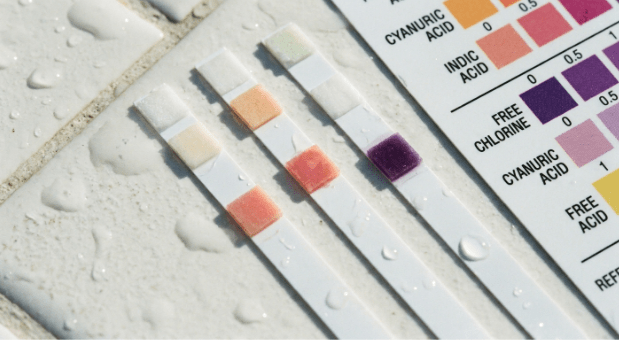

Cyanuric acid, often referred to as chlorine stabilizer, plays a vital role in maintaining an outdoor swimming pool.
It protects chlorine from breaking down rapidly under the sun’s ultraviolet rays.
Without it, chlorine can lose nearly half its strength in less than 20 minutes of direct sunlight.
This stabilizer ensures that the chlorine you add remains active longer, keeping the water sanitary between treatments.
However, cyanuric acid does not evaporate or degrade naturally. It remains in the water indefinitely unless physically removed. This characteristic creates a common problem for pool owners: gradual accumulation over time.
What Causes Cyanuric Acid to Rise
The primary source of rising CYA levels is the chlorine product you use.
Many common chlorine tablets and granules contain cyanuric acid as part of their formulation. These are called stabilized chlorine products.
Each time you add a trichlor tablet or dichlor granules to the pool, you introduce additional stabilizer.
A single three-inch trichlor tablet can raise CYA by approximately 6 ppm in 10,000 gallons of water.
Over weeks and months, this steady addition pushes levels upward. Liquid chlorine, by contrast, contains no cyanuric acid.
Many pool professionals recommend switching to liquid chlorine to prevent accumulation.
Some algaecides and water supply from local municipalities can also contribute to elevated CYA levels. Regular testing helps identify the source and allows for timely correction.
Signs That Cyanuric Acid Is Too High
The ideal CYA range for most outdoor pools is between 30 and 50 parts per million. Saltwater pools can operate slightly higher, typically between 60 and 80 ppm. Once levels exceed 80 ppm, problems begin to emerge.
High CYA reduces chlorine effectiveness significantly. Chlorine becomes chemically bound to excess stabilizer, leaving less free chlorine available to kill bacteria and algae. Pool owners often notice that their water remains cloudy or develops algae despite showing normal chlorine readings on test strips.
Another warning sign is rising chlorine demand.
You add more and more chlorine, but the water never seems to clear.
This occurs because the chlorine you add is being neutralized by the high CYA concentration.
False total alkalinity readings also occur, making water balancing confusing and frustrating.
The Reliable Method: Partial Drain and Refill
Lowering cyanuric acid requires removing water that contains high levels of stabilizer and replacing it with fresh water. This is the only method that pool experts agree works consistently.
Step 1: Test Accurately
Use a reliable test kit or test strips to measure current CYA concentration. If your test maxes out above 100 ppm, use a diluted sample. Mix equal parts pool water and distilled water, then multiply the result by two.
Step 2: Calculate Replacement Volume
Determine the percentage of water you need to drain.
A simple formula helps: subtract your target CYA from your current CYA, then divide by the current level.
For example, if current CYA is 120 ppm and target is 50 ppm, you need to replace about 58 percent of the water.
Step 3: Drain Safely
Turn off the pump and heater before draining.
Use a submersible pump or set your filter valve to the waste setting. Drain in stages rather than all at once.
Removing more than one-third of the water at a time can risk structural damage to vinyl liners or fiberglass pools.
Step 4: Refill and Retest
Refill the pool with fresh water after draining. Run the pump for at least 24 hours to circulate thoroughly. Retest the CYA level and repeat the process if needed.
Many pool owners search for easier solutions, which is why understanding exactly how to lower cyanuric acid in pool water provides clarity on the most effective approach for different situations.
Alternative Methods and Their Limitations
Some commercial products claim to reduce CYA biologically. These products use enzymes to break down cyanuric acid molecules over several days. Reviews remain mixed, and effectiveness varies depending on water temperature, pH balance, and initial CYA concentration.
If you choose to try a CYA reducer, follow manufacturer instructions precisely. Avoid using algaecides or clarifiers for at least one week beforehand. Ensure water temperature is above 65 degrees Fahrenheit. Results may take seven to ten days.
Reverse osmosis is another option, but it carries significant cost. Professional mobile filtration can cost between 500 and 1,000 dollars per treatment. While effective, this method remains impractical for most residential pool owners.
Preventing Cyanuric Acid from Rising Again
Once you correct high CYA levels, preventing recurrence is essential. The most effective strategy is switching to unstabilized chlorine. Liquid chlorine or calcium hypochlorite shock contains no cyanuric acid. Using these products exclusively prevents the gradual buildup that tablets cause.
Regular monthly testing during swim season helps catch rising levels early. Even basic test strips that measure stabilizer will alert you before levels become problematic. Keep a maintenance log to track trends over time.
Summary
Cyanuric acid is necessary for protecting chlorine from sunlight, but excessive levels create serious water quality issues.
Partial drain and refill remains the most reliable correction method.
Switching to unstabilized chlorine and monitoring levels regularly prevents the problem from returning.
Consistent testing and informed chemical choices keep your pool water balanced, clear, and safe for swimming throughout the season.