

Have you ever seen a lizard with a bright blue tongue? If so, you probably met a blue tongue skink. These amazing creatures are some of the most popular reptile pets in the world today. They look like little sausage dogs with scales, and they have very calm personalities. Many people love them because they are friendly, quiet, and highly intelligent.
If you are a beginner, this guide is perfect for you. We will walk you through everything you need to know about keeping these reptiles happy and healthy. From building their homes to choosing the right food, we have got you covered. Let us dive into the wonderful world of these unique blue-tongued lizards.
What is a Blue Tongue Skink?
A blue tongue skink is a medium-sized lizard native to Australia and parts of Indonesia. They belong to the Scincidae family and are famous for their flat, blue tongues. In the wild, they use this bright tongue to scare away predators like birds or snakes. When they feel threatened, they open their mouths wide and hiss to say, “Do not mess with me!”
In captivity, they are generally docile and curious animals. They enjoy exploring their surroundings and can even learn to recognize their owners over time. Because they live a long time, sometimes up to twenty years, they are a long-term commitment. However, their easygoing nature makes them a joy to care for every single day.
The Northern Blue Tongue Skink vs. Indonesian Varieties
When looking for a pet, you will mainly find two options: the northern blue tongue skink and the indonesian blue tongue skink. The Northern variety is usually the most popular choice for beginners. They are bred in captivity, which makes them very friendly, hardy, and easier to handle. They also do not need as much humidity as their Indonesian cousins.
The indonesian blue tongue skink is also beautiful but requires extra care. They come from warm, rainy rainforests, so they need a very humid tank to stay healthy. If their environment is too dry, they can get sick or have trouble shedding their skin. Knowing which type you have is the first step to successful reptile parenting.
Understanding the Full Size Blue Tongue Skink
Before you bring one home, you must consider the blue tongue skink size. Baby skinks are tiny and cute, but they grow incredibly fast. Within just one year, they can reach their adult length. This rapid growth means you need to prepare for a large pet much sooner than you might think.
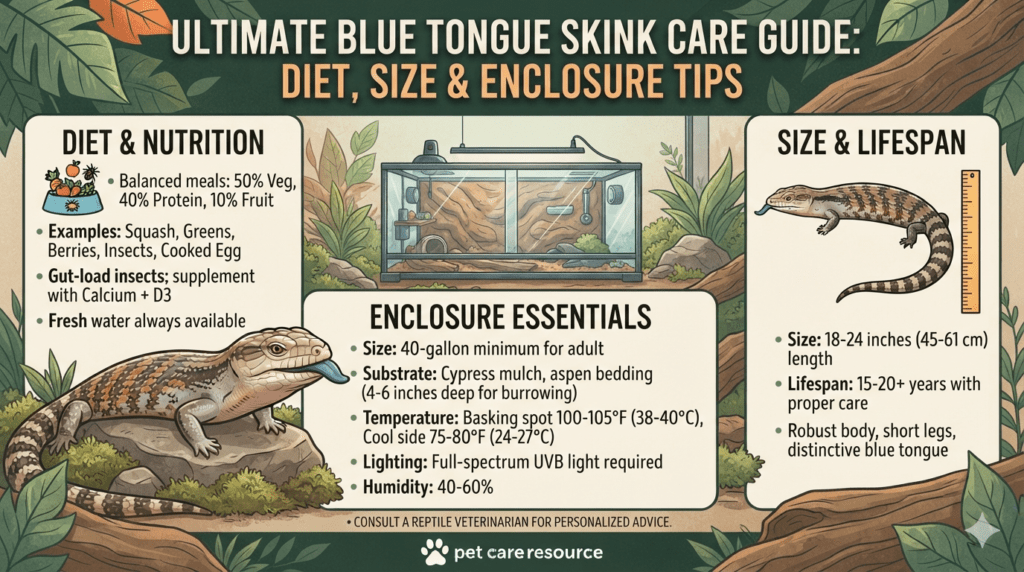
A full size blue tongue skink typically measures between eighteen and twenty-four inches from their nose to the tip of their tail. They are heavy-bodied lizards, meaning they are quite chunky and solid. Because of their large size, they need plenty of ground space to walk around, dig, and stretch out comfortably.
Choosing a Blue Tongue Skink for Sale
If you are ready to buy, look for a healthy blue tongue skink for sale from a trusted breeder. Avoid buying wild-caught reptiles, as they often carry pests and get stressed easily. A captive-bred lizard will be much healthier, calmer, and ready to bond with you.
| Aspect | What to Look For |
| Eyes | Clear, bright, and free of crust |
| Toes & Tail | Complete, with no missing tips or stuck skin |
| Behavior | Alert, active, and curious about surroundings |
| Body | Plump and clean, without visible bones showing |
Setting Up the Perfect Blue Tongue Skink Enclosure
Your pet needs a safe and sturdy home to thrive. A proper blue tongue skink enclosure must be large enough for an adult lizard. A front-opening wooden or glass terrarium is best because it keeps heat inside and lets you reach in easily.
For a full-grown skink, you should use a tank that is at least four feet long, two feet wide, and two feet tall. Since these lizards live on the ground and do not climb much, floor space is much more important than height. Be sure to use a secure screen lid to keep your pet safe.
Substrate and Decor for Digging
These lizards absolutely love to dig and burrow in the ground. You need to fill the bottom of your blue tongue skink enclosure with a safe substrate. Excellent choices include coconut husk, cypress mulch, or a clean soil-and-sand mix. Avoid using cedar or pine wood shavings because they contain toxic oils that can harm your pet.
You should add several hiding spots, like hollow logs or plastic caves, on both the warm and cool sides of the tank. Add some flat rocks, fake plants, and sturdy branches to make the environment interesting. This setup gives your lizard places to hide, explore, and feel safe in their new home.
Heating and Lighting Requirements
Like all reptiles, a blue tongue skink is cold-blooded and relies on the environment to regulate its body temperature. You must create a temperature gradient in their tank. This means one side should be warm and basking, while the other side remains cool.
Use a basking bulb to create a hot spot of around ninety-five to one hundred degrees Fahrenheit. The cool side of the tank should stay around seventy-five to eighty degrees Fahrenheit. You must also provide a high-quality UVB light bulb. This special light helps your pet absorb calcium and prevents metabolic bone disease, keeping their bones strong and healthy.
Managing Humidity Levels
Humidity is incredibly important for blue tongue skink care, but the correct level depends on the species. Northern skinks prefer drier air, around forty to sixty percent humidity. A light misting of water once a day or a damp hide box is usually enough for them.
On the other hand, an indonesian blue tongue skink needs high humidity, between seventy and ninety percent. You can keep the air wet by using moisture-retaining bedding, misting the tank multiple times a day, or using an automatic fogger. Use a digital hygrometer to measure the humidity daily so you can keep it perfect.
What is the Best Blue Tongue Skink Diet?
Feeding your lizard is one of the most fun parts of being a pet owner. A healthy blue tongue skink diet is highly varied because they are omnivores, meaning they eat both plants and meat. In the wild, they eat insects, fruits, flowers, and even snails.
- Vegetables (50% of diet): Collard greens, mustard greens, dandelion greens, squash, and green beans.
- Proteins (40% of diet): High-quality grain-free wet dog food, dubia roaches, earthworms, and snails.
- Fruits (10% of diet): Blueberries, raspberries, bananas, and papaya (given as occasional sweet treats).
You should also dust their food with calcium and vitamin D3 powder two to three times a week to ensure they grow strong.
Safe Handling and Taming Tips
Taming your new lizard takes time, patience, and gentle movements. When you first bring your pet home, leave them alone for a week to let them get used to their new space. Once they are settled, start by placing your hand inside the tank so they can smell you.
When handling your blue tongue skink, always support their entire heavy body with both of your hands. Never grab them by the tail, as they can drop it when they feel scared. Keep your handling sessions short and positive, around ten to fifteen minutes, and offer a small treat like a blueberry to build trust.
Common Health Issues to Watch For
Keeping a close eye on your pet’s behavior is a key part of blue tongue skink care. Healthy skinks are active, alert, and eat regularly. If you notice your lizard becoming lazy, refusing food, or having trouble breathing, they might need a visit to an exotic animal veterinarian.
One common issue is stuck shed, which happens when old skin does not fall off their toes or tail tip. You can help by giving your skink a warm bath and gently rubbing the skin away. Another serious issue is metabolic bone disease, which is caused by a lack of UVB light or calcium. Providing proper lighting and vitamin supplements will easily prevent this painful illness.
Conclusion
Owning a blue tongue skink is a wonderful and rewarding experience for any animal lover. These charming lizards bring endless joy with their funny waddles, curious eyes, and striking blue tongues. By setting up a spacious home, feeding them a balanced diet, and keeping their temperatures right, you will have a happy companion for many years to come.
Frequently Asked Questions
How long does a blue tongue skink live?
With proper care, a healthy captive skink can live between fifteen and twenty years. This long lifespan makes them a wonderful, long-term pet.
Can they live together in the same tank?
No, these lizards are solitary animals and do not like to share their space. Keeping more than one in a tank can lead to stressful fighting and serious injuries.
How often should I feed my adult lizard?
Adult skinks only need to be fed two to three times a week. Babies and young growing skinks should be fed every day or every other day.
Do they bite, and does it hurt?
These reptiles are very gentle and rarely bite unless they are extremely scared. If they do bite, they have strong jaws, so it can pinch, but they do not have sharp teeth.
What is the best vegetable to feed them?
Dark leafy greens like collard greens, mustard greens, and turnip greens are the best daily choices. Avoid feeding them iceberg lettuce, as it has no nutritional value.
Do they need a water bowl?
Yes, you should always keep a shallow, heavy water bowl in their enclosure. Change the water daily, as they like to soak and sometimes use it as a bathroom.