
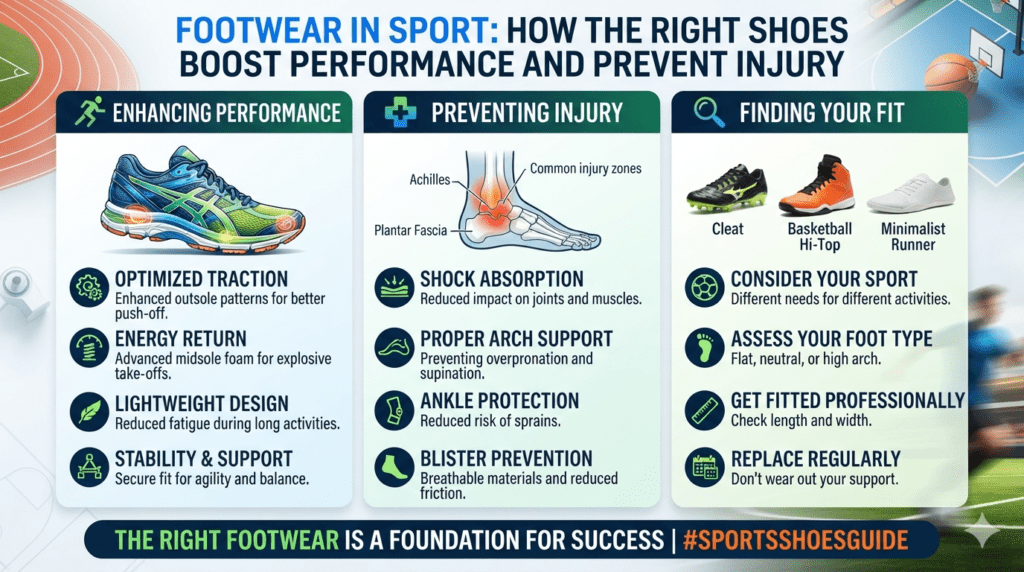

Have you ever wondered how a simple pair of shoes can change the way you run, jump, or play? It is true that footwear in sport has come a very long way from basic leather boots of the past. Today, sports shoes are highly engineered tools designed to protect your body and boost your athletic performance. Whether you are a weekend walker or a fast track star, your shoes act as the ultimate foundation for every single movement you make.
Finding the right gear is not just about looking cool on the field, though a nice design certainly helps. It is actually about understanding science, physics, and how your unique feet move across different surfaces. In this complete guide, we will explore the wonderful world of modern athletic shoes. We will look at how technology, medical research, and cool new building methods are changing the game for players everywhere. Let us dive in and learn why your shoes are the most important equipment you own.
Why Shoes Matter on the Playing Field
When you run, your feet hit the hard ground with a lot of force. In fact, the impact can be up to four times your actual body weight. This is why having the proper footwear in sport is so important for every active person. Without the right cushion, all of that heavy shock travels straight up into your ankles, knees, and hips. Over time, this heavy pounding can cause painful aches and keep you on the sideline for weeks.
Good athletic shoes do more than just absorb the hard impact of your steps. They also help you grip the ground so you do not slip and fall while playing. Different games need different kinds of grip, which is why soccer cleats look so different from basketball shoes. By wearing the correct shoes, you give your body the best chance to move fast and stay safe.
The Growth of Footwear in Sports
If we look back in time, shoes used to be very heavy and stiff. Athletes in the early days wore simple shoes made of heavy canvas and thick rubber. Today, the world of footwear in sports has changed completely thanks to endless research and new materials. Modern shoes are incredibly light, breathable, and designed for very specific movements.
This amazing evolution did not happen overnight. Sports brands have spent decades studying the way human feet move during different activities. They use fast cameras and pressure pads to see exactly where your feet need the most support. Because of this hard work, athletes today can run faster and jump higher than ever before in history.
Understanding Your Unique Arch and Foot Type
Before you buy your next pair of shoes, you need to know your foot shape. Every person has a different kind of arch, which usually falls into three main groups. You might have a flat foot, a normal arch, or a very high arch. Knowing your specific type helps you find the right footwear in sport so you do not get hurt.
If you have flat feet, your ankles might roll inward too much when you walk or run. This movement is called pronation, and it requires a stable shoe with extra middle support. People with high arches usually need extra soft cushioning to help absorb shock. You can easily test your arch at home by wetting your foot and stepping on a piece of paper.
What is Sports Medicine Doing for Your Feet?
Doctors who study sports injuries know that many leg problems start right at the bottom of your feet. This is why athletic footwear and orthoses in sports medicine have become such important tools for recovery. An orthosis is a special custom insert that you slide directly inside your shoe to support your foot.
If you get hurt, a foot doctor can build a custom pair of these inserts just for you. They make sure your bones and joints line up perfectly while you run and play. This custom care keeps your body in balance and helps you heal much faster from old sports injuries.
The Magic of 3D Printed Shoes
Technology is bringing some truly amazing changes to the shoes we wear today. One of the newest trends is using additive manufacturing techniques in sports footwear to print custom parts. Instead of cutting foam, machines build the shoe sole layer by layer using liquid plastic or powder.
This clever printing process allows brands to make midsoles with complex, web-like patterns. These patterns are super lightweight but still offer incredible bounce and protection. In the future, you might scan your feet with a phone and get a custom 3D printed shoe built just for you!
Finding the Best Shoe for Running
Running is a sport that requires a lot of repetitive forward motion. That is why running shoes are built specifically to push you forward comfortably. When shopping, look for footwear in sport that offers a thick, pillowy midsole to protect your heels.
A good running shoe should also have a flexible front area so your toes can push off the ground easily. Make sure there is a little bit of space at the front of the shoe. Your toes should never feel squished, especially since feet tend to swell up during a long workout.
Court Shoes vs. Running Shoes
Many people make the big mistake of wearing running shoes to play tennis or basketball. This can actually be quite dangerous for your ankles. Running shoes are only meant for moving straight forward, while court sports require quick side-to-side cuts.
Court shoes are designed with extra lateral support on the outer edges to keep you from rolling your ankles. They also use tough rubber soles that do not leave dark scuff marks on gym floors. Choosing the right footwear in sport for your specific activity is the easiest way to prevent painful sprains.
Real Athlete Comparison Guide
To help you understand how different shoes work, we have put together a quick guide. This table shows the main features of different sports shoes and how they help your body perform.
| Shoe Type | Best For | Key Feature | Core Benefit |
| Running Shoe | Jogging & Marathons | Thick Foam Midsole | Absorbs heavy shock |
| Court Shoe | Tennis & Pickleball | Side-to-Side Support | Prevents ankle rolling |
| Cleats | Soccer & Football | Studded Outsole | Grips grass and mud |
| Cross-Trainers | Gym & Lifting | Flat, Stable Sole | Good for multiple sports |
How Often Should You Replace Your Shoes?
Even the best footwear in sport will eventually wear out and lose its protective power. Over time, the soft foam inside the shoe gets compressed and stops absorbing shock. As a general rule, runners should replace their athletic shoes every 300 to 500 miles.
If you do not track your miles, you can look for other warning signs. Check the bottom of your shoes to see if the grip is worn smooth. If your feet or knees start aching after a workout, it is probably time to buy a fresh pair.
Quick Tips for Buying the Perfect Fit
- Shop late in the day: Your feet naturally swell up as you walk around all day. Buying shoes in the afternoon ensures they will not feel too tight later.
- Bring your own socks: Always wear the same type of socks you plan to use during your games.
- Measure both feet: One of your feet might be slightly larger than the other. Always buy the size that fits your larger foot comfortably.
- Do not rely on breaking them in: Your new footwear in sport should feel comfortable the very first time you try them on in the store.
Conclusion
At the end of the day, your feet are the foundation of your entire active life. Investing in high-quality footwear in sport is one of the smartest choices you can make for your health. By choosing shoes that match your specific sport and foot shape, you can stay pain-free and enjoy your favorite games for many years to come.
What kind of shoes do you wear for your favorite workout? Have you ever tried custom insoles? Let us know in the comments below, and do not forget to share this guide with your workout buddies!
Frequently Asked Questions
1. Why is choosing the right footwear in sport so important?
Wearing the right shoes protects your joints from heavy shock, improves your balance, and helps prevent common sports injuries.
2. What are the benefits of athletic footwear and orthoses in sports medicine?
These medical tools help correct the way your feet move, distribute your body weight evenly, and reduce pain from injuries.
3. How does additive manufacturing techniques in sports footwear change shoe design?
This technology allows brands to print lightweight, highly customized midsoles that offer better bounce and perfect support.
4. Can I wear running shoes to play court sports?
It is not recommended, as running shoes lack the side-to-side support needed for court games, which can lead to ankle injuries.
5. How often should I buy new footwear in sports?
Most active people should replace their athletic shoes every 300 to 500 miles, or whenever the support foam feels flat.
6. How do I know if my shoes fit correctly?
You should have a small thumb-width of space at the front of your toes, and your heel should not slip when you walk.